This guide breaks down five practical ways to lower your college debt in 2026 by making smarter decisions before you borrow, using the new FAFSA rules to your advantage, and understanding how today’s repayment systems actually work in practice.
FAFSA 2026 Strategy: Maximize Grants and Avoid Preventable Aid Loss
The biggest mistake families are making in 2026? Waiting until summer. Under the One Big Beautiful Bill Act (OBBBA), the financial aid timeline has permanently shifted. The 2026-27 FAFSA launched on September 24, 2025, if you haven’t filed yet, you are already behind the “Priority 1” wave. Many state grants (including those in IL, NJ, and NC) operate on a “first-come, first-served” basis with February 1 deadlines. Check your state’s deadline here.
The “Quiet $10,000 Mistake” (And Why It Happens) Many families wait to file because they believe they need their 2025 tax return. That delay can be costly. The FAFSA uses “prior-prior year” income, meaning the 2026–27 form is based on 2024 tax data, which most families already have. Waiting until spring does not improve accuracy—and it can often cost families thousands in lost grant eligibility, particularly for state and institutional aid with early deadlines.
The “Small Biz” Win (New for 2026) If your family owns a business or farm with under 100 employees, its net worth is now excluded from your aid calculation. This massively benefits middle-class entrepreneurs by slashing your Student Aid Index (SAI) and unlocking Pell Grants that weren’t available last year.
| Business Net Worth | Old Rules (2024-25) SAI Result |
NEW 2026 Rules (OBBBA) SAI Result |
Est. Pell Grant (New Rules) |
|---|---|---|---|
| $0 (No Business) | $5,386 | $5,386 | $2,000+ |
| $100,000 | $12,500 | $5,386 (EXCLUDED) | $2,000+ |
| $500,000 | $45,000 | $5,386 (EXCLUDED) | $2,000+ |
| $1,000,000 | $92,000 | $5,386 (EXCLUDED) | $2,000+ |
| $5,000,000 | $266,000+ | $5,386 (EXCLUDED) | $2,000+ |
*Note: Calculations based on a family AGI of $60,000. Under OBBBA, qualifying small business assets no longer increase the SAI.
Why this matters: Under the old rules shown in your previous image, a $1M business value would have pushed your SAI so high that you’d qualify for **$0** in need-based aid. In 2026, that same family qualifies for the same aid as someone with no business at all.benefits middle-class entrepreneurs by slashing your Student Aid Index (SAI) and unlocking Pell Grants that weren’t available last year.
Income alone no longer tells the full story. In 2026, many colleges require a FAFSA on file to award institutional merit scholarships, even when those awards are not income-based. Skipping the FAFSA can mean opting out of scholarship money you would otherwise receive automatically.
Strategic Degree Planning: Use Guaranteed Transfer Systems to Cut Debt at the Source
One of the most effective ways to lower college debt happens before you borrow anything at all: choosing a degree path that minimizes the cost of required credits. For many students in 2026, this means using policy-backed transfer systems that allow you to complete part of your degree at a lower-cost institution—without sacrificing graduation timelines, credit validity, or the final diploma.
The Result: You graduate with the exact same diploma and alumni network as your peers, but often with $30,000–$50,000 less debt.
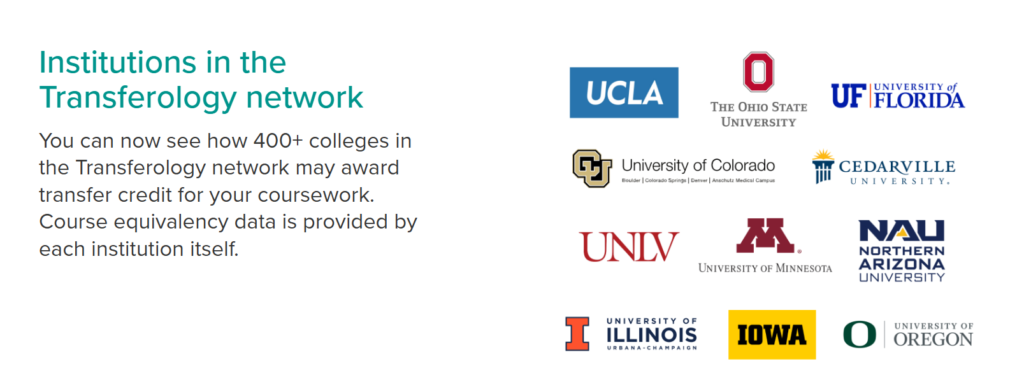
Use Transferology, a nationwide network used by over 400 institutions to show you exactly how your credits will transfer before you even enroll. It eliminates the guesswork by providing a clear path for students in all 50 states.
Sign a TAG in your first year of community college for guaranteed university admission.
Borrowing Discipline: The “OBBBA” Debt-Reduction Blueprint
In 2026, we are no longer in a low-interest environment. Under the One Big Beautiful Bill Act (OBBBA), interest rates have stabilized at 6.39% for Undergraduates and 8.94% for Parent PLUS loans. At these rates, how and when interest accrues matters just as much as how much you borrow. The goal is simple: prevent interest from snowballing and choose repayment paths that actively reduce your balance instead of letting it grow.
Strategy 101: Pay Interest on Unsubsidized Loans While Enrolled
Current Federal Loan Interest Rules (Loans Disbursed 2025-2026):
- Direct Subsidized Loans: Government pays interest while enrolled ≥½ time and during 6-month grace period.
- Direct Unsubsidized Loans: Interest accrues immediately upon disbursement (rates: 6.53% undergrad, 8.08% grad for 2025-26).
- PLUS Loans: Interest accrues Day 1 (8.94% fixed).
Capitalization Triggers: Unpaid interest is added to principal when you exit school, drop below ½ time, end grace period, or exit deferment/forbearance: permanently increasing your balance and future interest
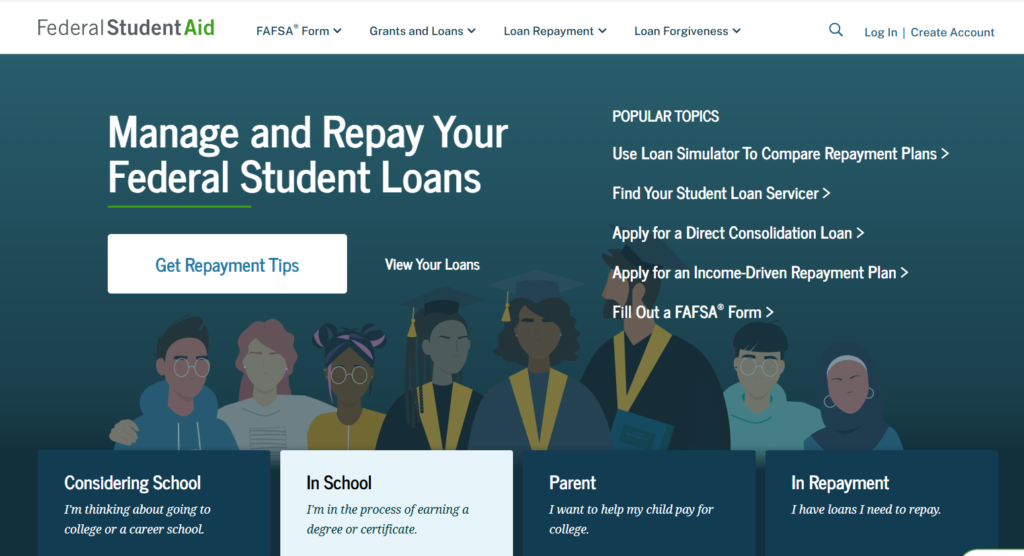
Recommended Action: Contact your servicer to make interest-only payments on unsubsidized portions while enrolled. Log into StudentAid.gov → “My Aid” → note unsubsidized balances → call servicer for monthly interest amount (often $20-50).
Quantified Impact Example: $10K unsubsidized @ 6.53% over 4 years + grace = ~$2,700 accrued interest. Pay as it accrues → save $2,700 capitalization + $1,500+ lifetime interest on Standard 10-year plan. Actual savings vary by balance/term.
Strategy 102: Use Repayment Assistance Plan (RAP) “Interest Subsidy” Feature Post-Graduation
RAP Plan Overview (2026 Rules): The Repayment Assistance Plan (RAP), available July 1, 2026 as the primary income-driven repayment (IDR) option for new Direct Loan borrowers, includes a powerful interest waiver that prevents negative amortization.
Unlike older plans where unpaid interest capitalized, RAP waives 100% of unpaid monthly interest and ensures principal reduction.
How RAP Works in Practice:
If your RAP payment < accruing interest, Department of Education waives the difference and your balance does not grow.
Action Steps:
- New borrowers (post-July 2026): Enroll in RAP at studentaid.gov/idr after grace period (10 minutes).
- Recertify annually—AGI changes adjust payments + dependent discounts ($50 each).
Important Parent Note:
Parent PLUS loans do not qualify for RAP. Parents who want access to other income-driven options, such as Income-Based Repayment (IBR), should review consolidation requirements and deadlines carefully.
Strategy 103: Stack 0.25% Autopay Discount on RAP Payments
All servicers offer 0.25% interest rate reduction for autopay enrollment. On $40K @ 6.53% → saves $82/year → $1,000+ over 12 years. On its own, this may seem insignificant but over the life of a loan, it reduces total interest costs and pairs well with other strategies.
Action Steps:
- RAP + autopay = effective 6.28% rate with government interest waiver
- Enroll autopay Day 1 of repayment (servicer portal, 2 minutes)
- Extra payments → “principal only” via servicer dropdown
Nelnet/MOHELA/EdFinancial rates same, but Aidvantage offers 0.25% signup bonus for RAP + autopay within 90 days. Check StudentAid.gov dashboard → “My Aid” → “View loan servicer details” for your assignment.
Playing Offense: Earn Capital to Eliminate Debt Before It Grows
Managing debt is defensive. Reducing it quickly requires offense—earning or capturing money that would otherwise be borrowed at high interest. In 2026, the smartest students don’t just borrow less. They replace loans with targeted income and overlooked funding sources.
Departmental and Donor-Funded Grants: Most academic departments control endowed funds that must be awarded before the fiscal year ends on June 30. These funds often go unused simply because students never ask. These funds are frequently small to mid-sized—but every dollar received here is a dollar you don’t borrow at 6–9% interest.
The Practical Move (February–April): Email your department chair or program coordinator to ask whether your program offers any departmental scholarships, donor-funded grants, or end-of-year discretionary awards.
Treat scholarship hunting like a part-time job: Large national scholarships are competitive, but smaller awards are plentiful and underutilized. Set aside 2 hours every Sunday to apply for three “Micro-Awards.” These small amounts cover “Hidden Costs” such as textbooks, lab fees, and transportation that usually get put on high-interest credit cards.
Use Scholarships.com Bold.org, BigFuture, and CareerOneStop. These platforms have improved their 2026 filters to match your specific major with “low-applicant” awards.
High-ROI Campus Employment job: While traditional entry-level student jobs offer a steady foundation, look for “High-Leverage” roles that provide multipliers to your income such as:
Free Housing & Food
Target housing-waiver roles (e.g., RAs). Valued at $15k–$20k, these packages wipe out your biggest non-tuition cost
Higher Hourly Pay
Target specialized roles in tech support, labs, or media centers. These require specific training and command significantly higher hourly wages.
Connections
Departmental roles place you in direct contact with faculty and donors who control “Endowed Funds,” often leading to unadvertised grant opportunities.
One-Time Boost: Replace Gifts With Principal Payments: When relatives ask what you want for birthdays, holidays, or graduation, redirect generosity strategically. Platforms like GiftOfCollege allow friends and family to contribute directly to your student loan principal. A $50 payment today doesn’t just reduce your balance—it eliminates all future interest that would have accrued on that $50 over the life of the loan. Over time, small gifts can translate into hundreds of dollars in avoided interest.
An extra $300 per month doesn’t feel dramatic at that moment, but if you send it directly to your highest‑interest loan, that’s $3,600 per year. Over 5 years, you’ve thrown $18,000 at principal. The Math: On a $30,000 loan at roughly 5% interest, adding $300 a month can turn a soul-crushing 10‑year payoff into a manageable 5–6 year sprint. You aren’t just paying the debt; you are “buying back” four years of your life.
Remember